Mattress materials · Sleep and design
Inside Natural Fillings: How Wool, Cotton, and Horsetail Shape Luxury Mattress Comfort
A mattress’s first impression may be its softness. Its character, however, is often made layer by layer: in the fibers that cushion the body, move moisture, and help the surface recover after a night’s pressure.
Published October 24, 2026
Mattress shopping invites the eye to do too much. A lofty top suggests plushness; a long list of natural materials suggests refinement. But neither appearance nor a label can tell the whole story. What matters is how each material is used, how it interacts with the layers around it, and whether the resulting feel suits the person sleeping on it.
Wool, cotton, and horsetail each have distinct properties. Wool can contribute cushioning and help manage moisture. Cotton offers a familiar, relatively breathable textile presence. Horsetail—used in mattress upholstery as prepared fibers, not as a magical shortcut to comfort—can add a springier, more resilient element to a filling blend. In a well-made mattress, these materials work as a team rather than as competing claims on a label.
The distinction is worth understanding because “natural” describes origin, not performance by itself. A natural filling is not automatically cooler, more supportive, longer-lasting, or better for every sleeper. Construction, quantity, preparation, quilting, spring design, firmness, room conditions, and care all matter. The most useful question is not simply, “What is inside?” It is, “What does each layer do, and what will that mean in my bed?”
The quiet work of a comfort layer
A mattress is a small piece of architecture. Its core bears and distributes load; the upholstery above it softens the encounter between body and structure. In a spring mattress, comfort layers can temper the springs’ response, reduce the sense of direct contact with the support system, and shape how pressure is spread across the surface. The same filling can feel different depending on its thickness, density, arrangement, and the tension of the springs beneath it.
This is why a material list cannot substitute for a construction description. A few ounces of a fiber at the surface will not behave like a substantial, carefully arranged layer. Nor does the name of a fiber reveal whether it is blended, layered, compressed, tufted, or placed next to other materials. Quilting and hand-tufting can help secure upholstery layers and maintain their arrangement, but they do not make a mattress immune to settling or wear.
The body, meanwhile, is not a uniform weight on a uniform plane. Shoulders and hips may press more deeply into the mattress than the waist or legs. A sleeper’s position, build, movement, and temperature preferences change what feels comfortable. Fillings can influence the first few inches of that experience, but the underlying support system and chosen firmness remain central to how the mattress feels overall.
Wool: cushioning with a moisture-management role
Wool is prized in upholstery for a combination of softness, loft, and the way it interacts with moisture. In a mattress, wool may help create a cushioned surface and contribute to a more accommodating feel. Its fibers can also take up water vapor, a property relevant to the small, warm microclimate that forms between sleeper, bedding, and mattress. That does not mean wool eliminates perspiration or guarantees a cool night. Room temperature, bedding, ventilation, and individual physiology remain part of the equation.
Different wool sources and preparations can vary in texture and behavior. Fiber length, cleaning, blending, and the way the wool is layered all affect the finished upholstery. A wool-rich surface may feel supple and yielding at first, yet its long-term performance depends on how much material is used and how the mattress is built to hold it in place. Like many soft materials under repeated pressure, wool can settle over time. A natural fiber is still a physical material subject to use.
Wool is often blended with other fibers rather than used alone. In a luxury mattress, a wool blend can help balance softness with structure, while other layers contribute different tactile qualities. When comparing products, ask whether the listed wool is in the mattress itself, in the cover, or in a separate component such as the divan. Those details can change how meaningful a specification is to the sleeping surface.
For people who sleep warm, wool is sometimes presented as a temperature solution. It is more accurate to view it as one possible part of a breathable material system. The cover fabric, thickness of upholstery, airflow through the mattress, base, and bedding all affect heat and moisture. The practical test is whether the complete bed feels comfortable in the conditions where it will be used—not whether a single fiber carries a reassuring reputation.
Cotton: a familiar fiber, with a supporting cast
Cotton appears in mattress covers and upholstery because it is a widely used textile fiber with a soft hand and a familiar feel. In a filling blend, it can contribute to the surface’s texture and help build a layered, breathable construction. The word “cotton,” however, does not specify the amount, grade, or placement. A cover made with cotton and a mattress generously upholstered with cotton are not the same thing.
In a mattress, cotton may be combined with wool or other fibers to create a particular balance of feel and stability. Its performance depends on the surrounding materials and how the layers are secured. It should not be treated as a stand-alone guarantee of cooling or durability. A dense, heavily quilted bed can behave differently from a lighter construction even when both include cotton.
Care is another part of the story. Mattress upholstery is not generally managed like a removable shirt or bedsheet, and cleaning instructions vary by product. A fitted protector can help limit the effect of spills and everyday soil, while regular airing and suitable bedding can support a cleaner sleep environment. Before using cleaning products or applying moisture, consult the manufacturer’s guidance; soaking a mattress can damage materials and complicate drying.
For shoppers, cotton is best understood as one element in a material recipe. Ask where it appears, what it is blended with, and whether it is part of the comfort upholstery or simply the ticking—the textile cover around the mattress. That simple distinction turns a broad claim into something more useful.
Horsetail: resilience in a less familiar form
Horsetail may be the least familiar of the three materials. In premium mattress descriptions, the term refers to prepared horsehair fibers used in upholstery, not to an intact plant-like structure or a spring hidden inside the bed. Its appeal lies in the way it can contribute a more resilient, responsive quality to a filling blend. That description is comparative, not absolute: the mattress’s overall feel still depends on the full construction.
Long strands of horsehair can be processed and arranged as part of a layered upholstery system. The material may help create a surface that feels less uniformly soft than a thick, compressible layer alone. Its role can be especially interesting alongside wool and cotton, which offer different tactile qualities. But “horsetail” should not be read as a promise of a specific firmness, bounce, or lifespan without details about the mattress’s design.
Terminology deserves attention. Product descriptions may use “horsetail” or “horsehair,” and may identify a source or preparation method. Ask the retailer to clarify what the term means in that model and where the fibers sit. A clear answer should explain the material’s role in the upholstery, not rely on the word’s unusualness to do the selling.
As with any filling, resilience is not the same as support. The spring unit or other core provides much of the mattress’s structural response. Upholstery can modify the feel at the surface, but it cannot be evaluated in isolation from the support system beneath it. A mattress can contain resilient fibers and still be the wrong firmness for a particular sleeper.
How the blend changes the feel
Imagine the materials as different instruments in one arrangement. Wool can lend softness and a cushioned, moisture-aware surface. Cotton can contribute textile softness and help shape the upholstery blend. Horsetail can add a more responsive character. The finished sound depends on their proportions, preparation, placement, and the structure beneath them.
This is why two mattresses with similar ingredient lists may feel noticeably different. One may have a generous comfort layer above a firmer spring unit; another may have less upholstery and a more immediate, buoyant response. A hand-tufted finish may help hold layers together, while edge construction and side-stitching can affect how the border is finished. Spring count is another specification, but a larger number alone does not establish comfort or quality: spring type, arrangement, tension, and the full mattress design matter too.
Natural fillings are also not a single category of feel. A mattress made with them may be soft, medium, firm, or extra-firm. It may suit one person’s preferred sleeping position and feel too yielding or too resistant to another. The materials describe components; they do not determine a universal verdict.
When possible, test the mattress in a way that resembles real use. Lie down in your usual position, give the surface time to respond, and notice whether pressure builds at the shoulders or hips. If you share the bed, consider movement transfer and whether each person needs a different firmness. A split-firmness option, where available, may address different preferences without forcing both sleepers to choose the same tension.
A practical example: the Vispring Signatory Superb
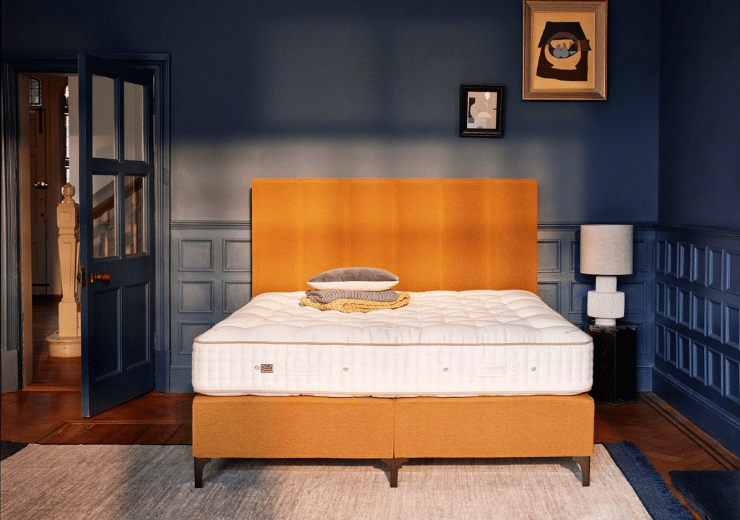
The Vispring Signatory Superb Mattress offers a concrete example of how natural upholstery and spring construction can be presented together. Its product specifications describe two layers of hand-nested calico pocket springs, with soft, medium, firm, and extra-firm tension options. The listed king-size mattress has 3,296 springs. Those figures describe construction, but they should be read as part of the whole rather than as a scorecard: spring count alone cannot predict whether the bed will suit an individual.
The stated upholstery includes British fleece wool, hand-opened long-stranded Austrian Moosburger horsetail, Shetland wool blended with cashmere, and a blend of Shetland wool and organic cotton. The mattress is described as hand-tufted, with woollen tufts and twine. In broad terms, this is a layered approach: fibers with different textures and characteristics are combined above a pocket-spring system, while the springs provide the underlying support and responsiveness.
The model is also specified at a depth of 23 centimeters, with additional doming listed separately. Its border includes coir and wool, along with side-stitching, handles, and air vents. Those details illustrate why a mattress should be considered as an assembled object—not just a headline list of fillings. The border, cover, upholstery, springs, and base can all contribute to the experience and care requirements.
These specifications can help a shopper ask better questions; they cannot replace a personal comfort assessment. A blend containing wool, cotton, cashmere, and horsetail is not automatically right for every body, climate, or budget. The model’s firmness options and the possibility of split firmness in king size may be useful considerations for couples, but the appropriate choice depends on preference and fit. Verify current specifications, available sizes, and trial or return terms with the retailer before purchasing.
What “natural” does—and does not—tell you
Natural fillings can be appealing for their tactile qualities and long traditions in upholstery. But the label alone does not certify that a mattress is environmentally preferable, hypoallergenic, chemical-free, ethically sourced, or suitable for someone with a particular sensitivity. Those claims require specific evidence and may vary by product, supplier, and jurisdiction. If a claim matters to your decision, ask for documentation rather than inferring it from a material name.
Nor does a natural filling eliminate maintenance. All mattresses experience use. Upholstery can compress, covers can collect dust and moisture, and the support core can age. A mattress protector, a stable and compatible base, and following the maker’s care instructions are sensible steps. Some mattresses are designed to be rotated rather than flipped; others may have different instructions. Do not assume that every natural mattress should be turned over.
Finally, the presence of natural fibers does not by itself predict a mattress’s total environmental footprint. Sourcing, processing, transportation, manufacturing, service life, and end-of-life options all matter. A durable product that remains comfortable for years may have practical value, but longevity should be assessed through construction details, warranty terms, and credible product information—not inferred from prestige or price alone.
Questions worth asking before you buy
Good questions make specifications less abstract. They also help separate a meaningful explanation from a list of attractive words. Consider asking:
- Which fillings are in the sleeping surface, and which are used in the border, cover, or divan?
- How are wool, cotton, and horsetail arranged, and what role is each intended to play?
- Are the listed materials blended together or placed in distinct layers?
- What spring system sits beneath the upholstery, and which firmness options are available?
- Can each side of a shared mattress be ordered at a different tension?
- What base is recommended, and does the product need rotation or other routine care?
- What are the delivery, trial, return, and warranty terms?
- Are claims about sourcing, certifications, or allergy suitability supported by specific documentation?
These questions do not require technical expertise. They require a retailer to connect materials with construction and practical use. If an answer leans only on words like “luxury,” “natural,” or “supportive,” ask for the detail behind the description.
Choosing for your body, not the label
For side sleepers, pressure relief around the shoulders and hips may be especially important. Back sleepers often look for a balance that supports the body without feeling excessively rigid or allowing too much sag. Stomach sleepers may prefer a firmer surface, although individual comfort varies. These are starting points, not rules: body shape, weight distribution, mobility, and personal preference all influence what feels supportive.
Consider temperature as part of the complete sleep setup. Natural fibers may contribute to moisture management and breathability, but a mattress cover, protector, duvet, room climate, and sleepwear can change the result. If overheating is a persistent problem, look at the full bedding system rather than assuming a single filling will solve it.
Couples face an additional calculation. Motion isolation, edge usability, size, and differing firmness preferences can matter as much as the fiber blend. Pocket springs are designed to respond individually, but the feel of a complete mattress depends on the upholstery and structure around them. Testing together—and separately, if split firmness is offered—can reveal preferences that a specification sheet cannot.
The useful way to read a material list
Wool, cotton, and horsetail are not interchangeable names for “comfort.” They describe materials with different characteristics, and their effect depends on how they are used. Wool can contribute cushioning and help manage moisture; cotton brings a familiar textile quality to covers and blends; prepared horsehair may add a more resilient element to upholstery. None, on its own, guarantees cool sleep, lasting support, or a perfect match.
The strongest purchasing decision joins the material list to the rest of the evidence: the spring system, firmness choices, upholstery depth, construction details, compatible base, care instructions, and terms of sale. A mattress such as the Vispring Signatory Superb makes that interplay visible through its stated natural fillings and hand-nested pocket springs. The worthwhile question is not whether its ingredients sound impressive. It is whether its complete design feels right for the people who will sleep on it.
That is the difference between buying a story and choosing a bed. Natural fillings can give a luxury mattress texture, complexity, and character. Understanding their roles turns those qualities into something more useful: a way to make a considered choice, one layer at a time.